 ranroswang@hksparkling.com
  +86 138 2341 8469


Selecting Pressure Sensors for Hitachi CP220-3: Buyer's Checklist
- Selecting Pressure Sensors for Hitachi CP220-3: Buyer's Checklist
- Why the pressure sensor matters for Hitachi CP220-3 operation
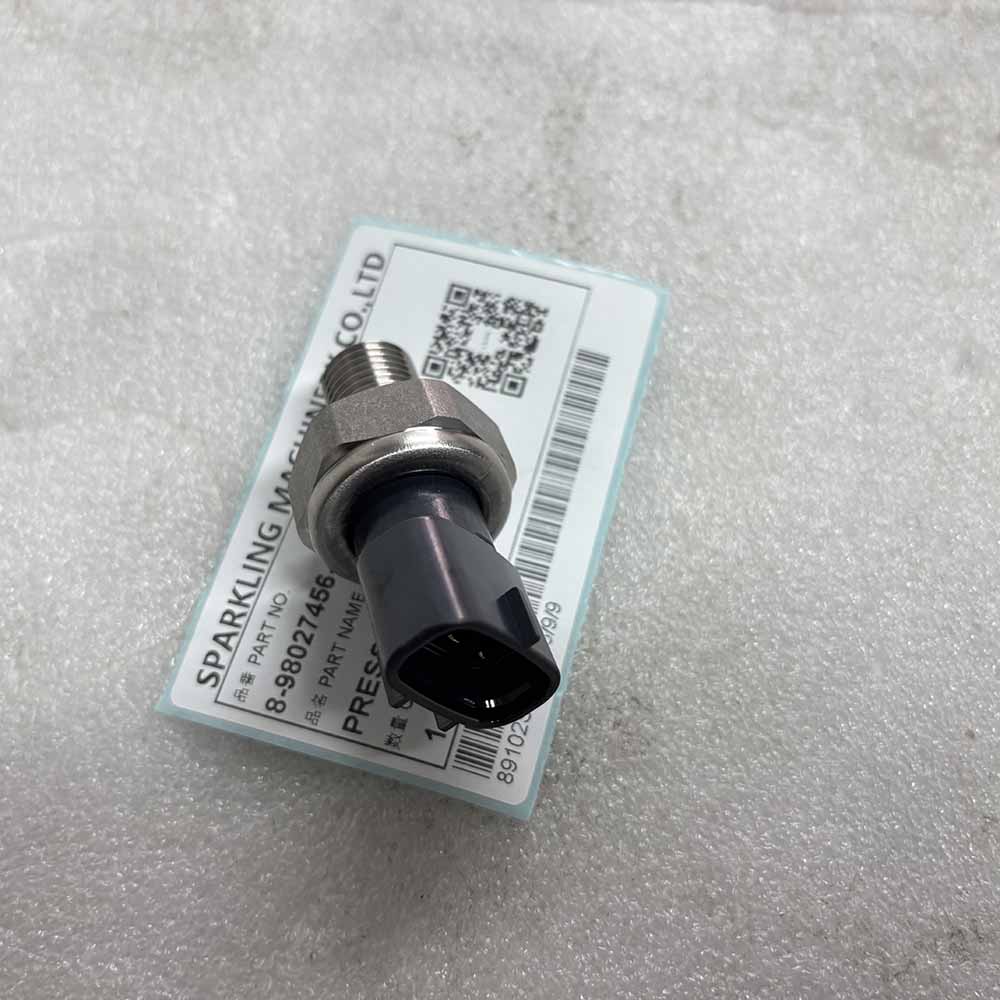
- About SPARKLING MACHINERY NEW 8-98027456-0 Pressure Sensor
- Key specifications and compatibility checklist
- Electrical and signal considerations
- Mechanical and installation considerations
- Environmental and durability factors
- Testing, calibration and verification before commissioning
- Common failure modes and diagnostic approach
- Purchasing tips: OEM vs aftermarket and warranty considerations
- Cost-benefit and lifecycle comparison
- Installation & maintenance checklist
- Why choose SPARKLING MACHINERY's 8-98027456-0 for your CP220-3
- FAQ
- Q: Is the 8-98027456-0 pressure sensor a direct replacement for Hitachi CP220-3?
- Q: What signal outputs should I expect from a CP220-3 pressure sensor?
- Q: How often should pressure sensors be calibrated or replaced?
- Q: What are common causes of pressure sensor failure?
- Q: Can I test the sensor without removing it from the machine?
- Contact / View Product
- Authoritative references and further reading
Selecting Pressure Sensors for Hitachi CP220-3: Buyer's Checklist
Why the pressure sensor matters for Hitachi CP220-3 operation
The pressure sensor is a small component with an outsized impact on excavator performance and safety. On the Hitachi CP220-3 and similar models, a reliable pressure sensor provides continuous, real-time data to the machine control system and operator displays. That information is used for hydraulic control, overload protection, engine derating, and diagnostic routines. A failing or out-of-spec pressure sensor can cause erratic hydraulic behavior, unexpected shutdowns, incorrect fault codes, or even damage to hydraulic components. When selecting a replacement, you should prioritize accuracy, environmental robustness, OEM compatibility, and proven long-term reliability to maintain uptime and prevent unplanned repair costs. After reviewing a buyer’s checklist for selecting pressure sensors for Hitachi CP220-3, engineers should confirm fitment details using a pressure sensor compatibility guide for Hitachi EG70R-3 excavators.
About SPARKLING MACHINERY NEW 8-98027456-0 Pressure Sensor
SPARKLING MACHINERY NEW 8-98027456-0 Pressure Sensor is a core hydraulic/engine system component for Hitachi CP220-3/EG70R-3/MA200/SR2000G/VR516FS excavators (construction/mining use). It accurately monitors fluid pressure and transmits real-time data to the control system, ensuring safe and stable equipment operation.
Meeting Hitachi OEM standards (Part No.: 8-98027456-0), it features high precision and environmental adaptability, guaranteeing seamless compatibility and reliable long-term performance.
Key specifications and compatibility checklist
Before purchasing any pressure sensor for the CP220-3, confirm these critical attributes. The short table below provides a comparison checklist you can use when evaluating parts:
| Requirement | Why it matters | Target/Recommendation |
|---|---|---|
| OEM Part Number | Ensures mechanical and electrical plug-and-play compatibility | 8-98027456-0 (exact match preferred) |
| Pressure Range | Must cover normal and transient hydraulic peaks without saturation | Match machine spec — typically up to 35–40 MPa for large excavators |
| Accuracy / Tolerance | High accuracy reduces control errors and false alarms | < ±1–2% FS preferred for critical circuits |
| Output Type | Must match ECU input (analog voltage/current or CAN/J1939) | 0–5V, 4–20mA, or specified digital protocol per machine wiring |
| Electrical Connector | Pinout and sealing must match harness for reliable signals | OEM connector or fully compatible sealed connector |
| Thread / Mounting | Ensures correct mechanical fit and leak-free installation | Match mounting thread, orientation, torque spec |
| Environmental Rating | Resists water, dust, vibration, and temperature extremes | IP67 or better; wide temp range (-40 to +125°C common) |
| Materials and Coatings | Corrosion resistance for hydraulic fluid and external environment | Stainless steel or corrosion-resistant plating |
Electrical and signal considerations
Pressure sensors interface with the machine's ECU or monitoring module using specific electrical outputs. Confirm the following before buying:
- Output type (voltage 0–5V, current 4–20mA, ratiometric, or digital bus). The CP220-3 harness expects a specific signal — using the wrong type yields incorrect readings or damage.
- Pinout and connector: ensure the mating connector and pin assignments match the OEM harness. Replace only with sensors offering identical pins or provide an adapter harness installed by a qualified technician.
- Signal conditioning and filtering: some sensors include internal filtering to handle hydraulic pulsation — useful in high-noise environments. Confirm sensor bandwidth and response time suit the control system's needs (faster response for active control, slower may be fine for monitoring).
- EMC/EMI compliance: sensors should meet relevant electromagnetic compatibility standards to avoid false signals under noisy electrical conditions common on heavy machines.
Mechanical and installation considerations
Mechanical compatibility is non-negotiable — a mismatched thread or orientation can leak hydraulic fluid or break the sensor during installation. When installing a pressure sensor on a CP220-3, follow these guidelines:
- Verify thread size and type (metric or BSP) and use the correct sealing method (O-ring, bonded seal, or thread sealant specified by OEM).
- Observe torque specifications: over-tightening can damage the sensor or crush sealing elements; under-tightening can leak.
- Mounting location and orientation: some sensors are orientation-sensitive for thermal reasons or internal diaphragm calibration. Follow OEM placement recommendations.
- Use the correct wrench flats and avoid applying force to the sensor body or electrical connector during tightening.
- Inspect the hydraulic port and harness for debris or damage prior to installation — contamination can foul a new sensor immediately.
Environmental and durability factors
Excavators work in harsh conditions: dirt, water, vibration, shock, and wide temperature swings. Choose a pressure sensor rated for these stresses to ensure longevity:
- Ingress protection (IP): IP67 or IP69K recommended for heavy equipment to survive pressure washing and immersion events.
- Vibration and shock resistance: sensors should be tested to relevant vibration profiles for construction equipment.
- Operating temperature: verify the sensor's working range covers cold starts and hot operating conditions (often -40°C to +125°C for heavy-duty sensors).
- Material compatibility: seals and wetted materials must resist hydraulic fluids and any additives used on site (anti-wear additives, biodegradable fluids, etc.).
Testing, calibration and verification before commissioning
Even with the correct part number, testing a replacement pressure sensor before returning the excavator to service prevents downtime. Recommended verification steps:
- Visual inspection for damage and correct connector seating.
- Bench test: use a calibrated pressure source to step through the sensor range and confirm linearity and accuracy against a reference gauge.
- On-machine functional test: observe live readings on the display/ECU while applying known pressures or running machine functions to verify expected behavior and no fault codes.
- Record test data and compare to machine baseline or OEM tolerances; if readings drift significantly, do not install.
- Document serial numbers and calibration dates for traceability and future service.
Common failure modes and diagnostic approach
Understanding how pressure sensors fail helps diagnose issues quickly. Common symptoms and checks include:
- Intermittent readings or noise: inspect wiring, connector corrosion, and ground connections. Use a multimeter or oscilloscope to observe signal stability.
- Stuck or zero reading: check for physical blockage, internal diaphragm rupture, or electrical open circuit. Confirm supply voltage and continuity to the sensor.
- Out-of-range readings: validate with a secondary gauge; replace sensor if readings differ beyond tolerance.
- False alarms or engine derate: ensure sensor is not affected by temperature drift or EMI; re-route wiring away from high-current cables if necessary.
Purchasing tips: OEM vs aftermarket and warranty considerations
When selecting a pressure sensor for an excavator like the Hitachi CP220-3, you will often decide between OEM (or OEM-equivalent) parts and lower-cost aftermarket options. Consider the following:
- OEM or OEM-standard parts (e.g., SPARKLING MACHINERY 8-98027456-0 that meets Hitachi Part No.: 8-98027456-0) typically guarantee fit, function, and tested compatibility. This reduces installation time and the risk of machine faults due to mismatched signals or threads.
- Certified aftermarket parts that explicitly state OEM standards and provide test data can offer savings while maintaining reliability. Verify documentation, calibration certificates, and warranty terms.
- Beware of counterfeit or untested low-cost sensors. They may appear identical but lack proper materials, calibration, or environmental protection — leading to early failure and higher lifecycle costs.
- Warranty and after-sales support: prefer suppliers offering warranty, technical support, and return testing. This is valuable for troubleshooting and faster resolution if a part fails in the field.
Cost-benefit and lifecycle comparison
Decisions should weigh initial purchase cost against expected lifetime, downtime risk, and potential for collateral damage. The simple table below summarizes typical trade-offs:
| Option | Upfront Cost | Reliability | Warranty / Support | Recommended Use |
|---|---|---|---|---|
| OEM / OEM-standard (e.g., SPARKLING 8-98027456-0) | Higher | High (tested for CP220-3) | Strong (supplier backed) | Primary service parts, critical machines |
| Reputable aftermarket (certified) | Moderate | Good (if backed by test data) | Moderate | Cost-sensitive fleets with proven supplier |
| Low-cost generic | Low | Variable; risk of early failure | Limited | Temporary field fix only |
Installation & maintenance checklist
Use this short checklist during installation and routine service to maximize sensor life:
- Confirm correct part number and visual match to old sensor.
- Clean mounting port and hydraulic lines; remove any debris.
- Install using recommended torque and sealing method; do not overtighten.
- Connect and secure harness; protect wiring from chaffing and heat sources.
- Perform bench and on-machine tests; record baseline readings.
- Inspect sensor and connections during scheduled maintenance; clean and reseal as needed.
Why choose SPARKLING MACHINERY's 8-98027456-0 for your CP220-3
SPARKLING MACHINERY's NEW 8-98027456-0 Pressure Sensor is designed and marketed specifically as a high-quality replacement compatible with Hitachi CP220-3 and other listed models. Key brand advantages to consider:
- OEM-standard compatibility (explicit part number match) reduces risk during replacement.
- Manufactured for heavy-duty environments: designed for accuracy, vibration resistance, and broad operating temperature ranges.
- Supplier emphasis on testing and traceability — useful for fleet managers who track part lifecycles and service histories.
- Availability of technical support and documentation can shorten repair times and reduce NTF (no trouble found) returns.
FAQ
Q: Is the 8-98027456-0 pressure sensor a direct replacement for Hitachi CP220-3?
A: Yes — the SPARKLING MACHINERY NEW 8-98027456-0 is specified to meet Hitachi OEM standards (Part No.: 8-98027456-0). Confirm physical thread, electrical connector, and signal type before installation to ensure a direct fit.
Q: What signal outputs should I expect from a CP220-3 pressure sensor?
A: CP220-3 systems typically use analog voltage or current signals, or specific digital protocols depending on the circuit. Always check your machine's wiring diagram or OEM manual for the expected output type and connector pinout.
Q: How often should pressure sensors be calibrated or replaced?
A: There is no one-size-fits-all interval; calibration schedules are based on operating hours, duty cycle, and environmental severity. For heavy-use mining or demolition, inspect sensors each service interval and bench-calibrate annually or after any suspect event. Replace on drift outside OEM tolerances.
Q: What are common causes of pressure sensor failure?
A: Common causes include hydraulic contamination, overpressure events, electrical connector corrosion, vibration-induced fatigue, and thermal cycling. Proper filtration, correct installation torque, and avoiding physical damage reduce failure risk.
Q: Can I test the sensor without removing it from the machine?
A: You can perform functional checks on-machine using a calibrated test gauge and observing ECU readings. However, accurate calibration requires bench testing with a known pressure source and reference gauge to isolate sensor error from system variables.
Contact / View Product
If you need a reliable replacement or technical assistance selecting the correct pressure sensor for your Hitachi CP220-3, contact our parts specialists or request the SPARKLING MACHINERY NEW 8-98027456-0 Pressure Sensor (Hitachi Part No.: 8-98027456-0). We provide fit verification, test reports, and support for installation and commissioning.
Contact us: — Request a quote or ask for the product datasheet and calibration certificate before purchase.
Authoritative references and further reading
For technical background and standards information, consult these authoritative sources:
- Pressure sensor overview — Wikipedia: https://en.wikipedia.org/wiki/Pressure_sensor
- Excavator overview — Wikipedia: https://en.wikipedia.org/wiki/Excavator
- Hitachi Construction Machinery (product and parts info) — Hitachi Construction Machinery Global: https://www.hitachicm.com/global/
- International Organization for Standardization (ISO) — main site for standards and guidance: https://www.iso.org/
End of article.
The Environmental Impact of Excavator Hydraulic Fluids and How to Mitigate It
Wholesale excavator control column manufacturer and supplier
Lead Times and Logistics for Procuring VOE14578951 Hydraulic Hose
Supplier Checklist for HYUNDAI EXCAVATOR PARTS Procurement
faq
What types of excavator parts do you manufacture?
We manufacture a wide range of excavator parts, including hydraulic components, undercarriage parts, engine parts, wear parts, and more. Our products are designed to fit a variety of excavator models and are built to meet the highest quality standards.
Do you offer customized parts?
-
Yes, we offer tailored solutions to meet specific customer requirements. Whether you need custom dimensions or specialized features, we can design and produce parts that perfectly match your excavator’s needs.
-
What is the lead time for receiving excavator parts?
Our typical lead time depends on the complexity and quantity of the order. For standard parts, delivery usually takes between 7 to 14 days. For custom orders, the lead time may vary, but we always strive to ensure timely delivery.
How do you ensure the quality of your parts?
We follow strict quality control procedures throughout the manufacturing process. Our parts are tested for durability, performance, and precision to ensure they meet industry standards and exceed customer expectations.
Are your products covered by a warranty?
-
Yes, all of our excavator parts come with a warranty to ensure quality and reliability. The warranty period may vary depending on the type of part. Please contact us for detailed warranty terms for specific products.
-
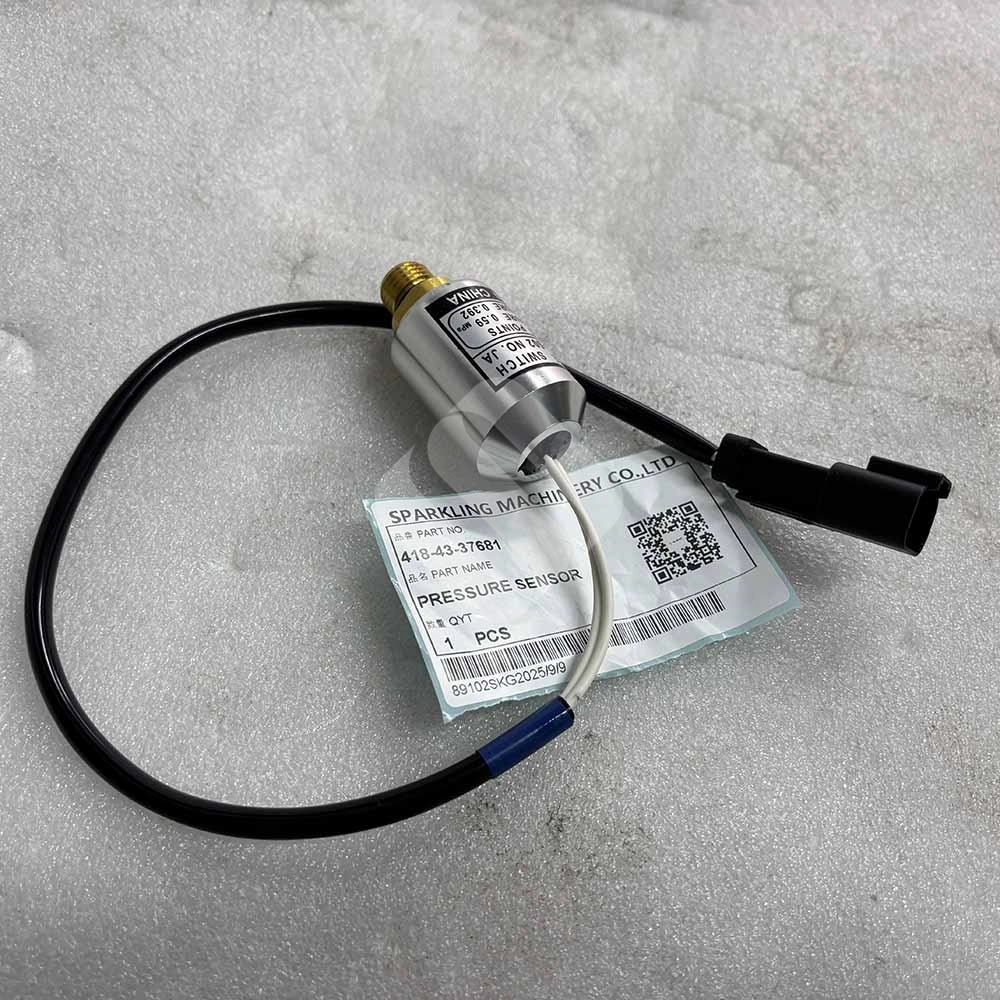
KOMATSU HIGH-QUALITY EXCAVATOR PARTS MADE IN CHINA NEW HD325 HD405 HM250 HM300 418-43-37681 PRESSURE SENSOR SPARKLING MACHINERY
SPARKLING MACHINERY NEW 418-43-37681 Pressure Sensor is a core hydraulic/engine system component for Komatsu HD325/HD405/HM250/HM300 excavators (construction/mining use). It accurately monitors fluid pressure and transmits real-time data to the control system, ensuring safe and stable equipment operation.
Meeting Komatsu OEM standards (Part No.: 418-43-37681), it features high precision and environmental adaptability, guaranteeing seamless compatibility and reliable long-term performance.

HYUNDAI EXCAVATOR SPARE PARTS USED ON R140W-7 R140W-7A R170W-7 R170W-7A R200W-7 31LF-00500 PRESSURE SENSOR
SPARKLING Hyundai Excavator Pressure Sensor (31LF-00500) is designed for Hyundai Heavy Equipment models R140W-7, R140W-7A, R170W-7, R170W-7A, and R200W-7. Ensures precise hydraulic system performance and durability for Hyundai Construction Equipment.
Part number 31LF-00500 (also written as 31LF00500) is a Pressure Sensor (specifically a hydraulic or fuel injection pressure sensor) used extensively in Hyundai heavy equipment.
Compatible Equipment
Hyundai Wheel Excavators: R55W-7, R140W-7, R170W-7, R200W-7 (including 'A' variants).
Hyundai Wheel Loaders: HL730-7, HL740-7, HL757-7, HL760-7, HL770-7, HL780-7A.
Hyundai Forklifts: 100D-7, 110D-7E, 180D-7E, 50D-7E, 80D-7E.
Series: Hyundai 7-Series, 7 Series Wheel Loader.
Product Details
Component Type: Pressure Sensor / Pressure Switch.
Function: Delivers critical pressure data to the engine or hydraulic control system for safety and operational efficiency.
Weight: Approximately 4.2 ounces (120 grams).
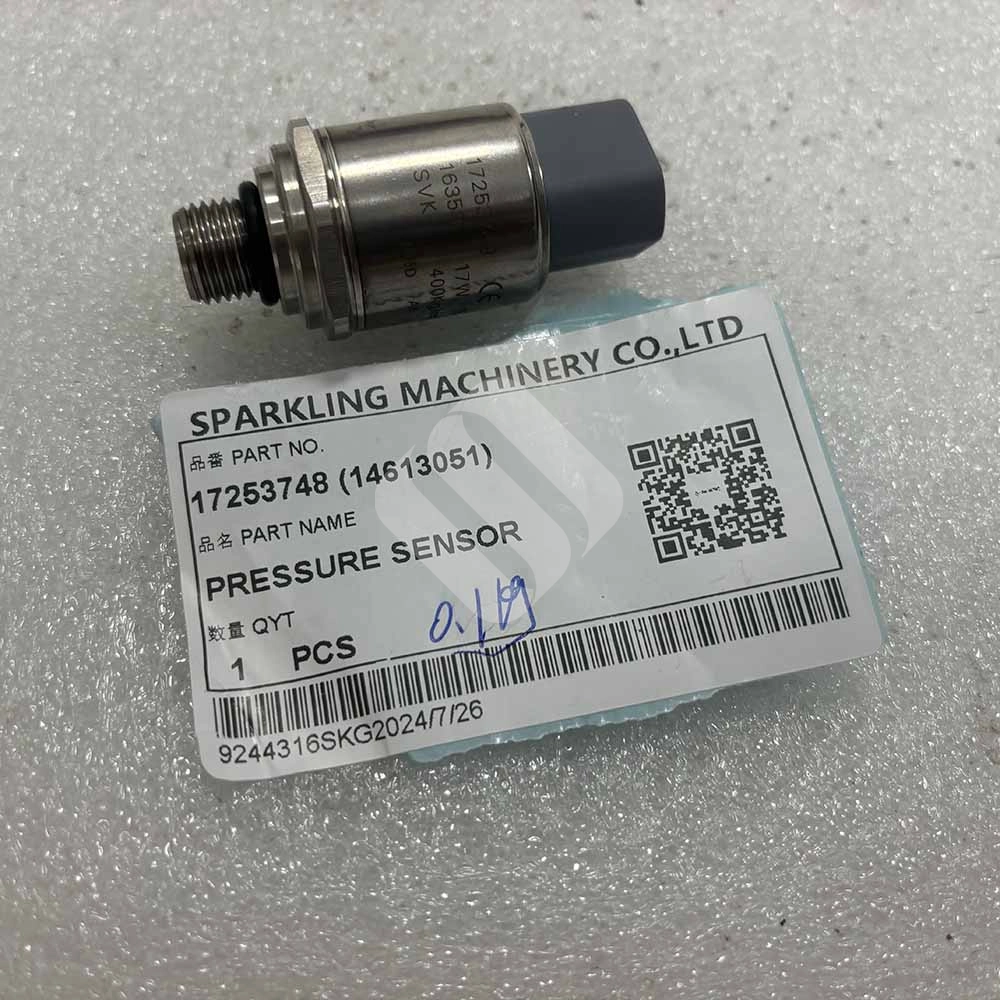
VOLVO EXCAVATOR PARTS MADE IN CHINA NEW EC300D EC250D EC220D EC235D EC160D 17253748(14613051) PRESSURE SENSOR SPARKLING MACHINERY
SPARKLING MACHINERY NEW EC300D EC250D EC220D EC235D EC160D 17253748(14613051) Pressure Sensor is a critical hydraulic/pneumatic monitoring component for Volvo EC300D, EC250D, EC220D, EC235D, and EC160D excavators (widely used in construction, mining, and infrastructure projects). As the "pressure guardian", it real-time detects hydraulic system pressure (e.g., boom, bucket circuits) or pneumatic pressure—alerting operators to abnormal pressure spikes/drops during tasks like digging, lifting, and rock breaking, while preventing component damage from overpressure and ensuring stable equipment operation.
Meeting Volvo OEM standards (part nos. 17253748/14613051), it endures -30°C to 100°C temperatures, resists oil corrosion and vibration, and guarantees accurate pressure signal output. Strict testing ensures seamless compatibility with the five Volvo models and long-term pressure monitoring reliability.
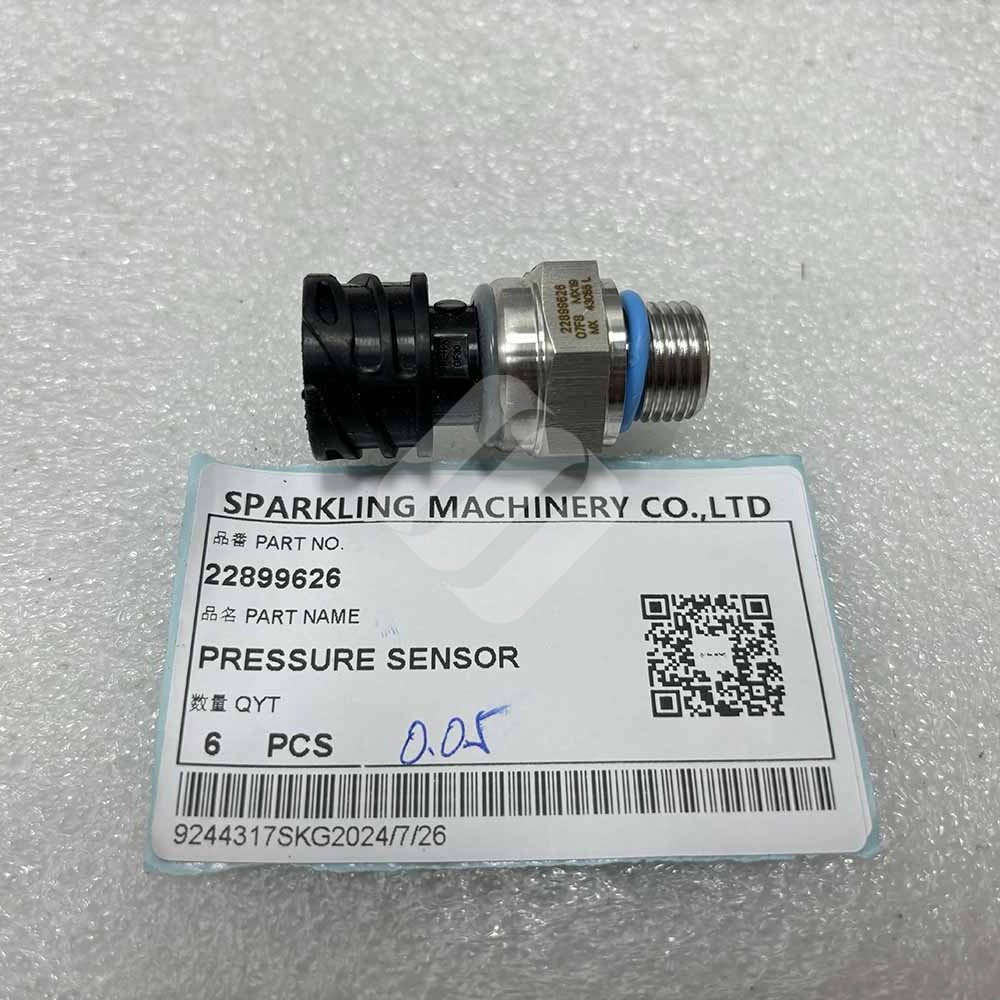
VOLVO EXCAVATOR PARTS MADE IN CHINA NEW A35G A40G A45G EC210D L150G 22899626 PRESSURE SENSOR SPARKLING MACHINERY
SPARKLING MACHINERY NEW A35G A40G A45G EC210D L150G 22899626 Pressure Sensor is a key hydraulic monitor for Volvo’s 5 excavator models (construction/mining use). It real-time tracks hydraulic pressure, sends accurate signals to the control unit, prevents overpressure damage, and maintains stable operation. Meeting Volvo OEM standards (22899626), it resists -30°C to 100°C temps, vibration, and oil corrosion, ensuring compatibility and reliability.

Contact us
Email: ranroswang@hksparkling.com
Wechat: +86 136 0901 0879
Skype: foreverlucia1
WhatsApp: +86 136 0901 0879
Address: No. 514-515, Hulin Road, Tianhe District, Guangzhou, China.
Sparkling Machinery Co.,Ltd
sparkling_machinery
Whatsapp: +8613609010879