 ranroswang@hksparkling.com
  +86 138 2341 8469


Supplier Vetting Checklist for Wheel Loader Idler Purchases
- Why thorough vetting matters for wheel loader components
- Operational and safety risks from substandard parts
- Quality, fleet uptime and lifecycle cost
- Standards and industry guidance
- Technical criteria: What to inspect on the K9003219 Idler Pulley
- Material composition and manufacturing methods
- Dimensional accuracy, tolerances and fitment
- Functional testing and performance data
- Commercial and supply-chain checks
- Certifications, traceability and documentation
- Lead time, MOQ and capacity planning
- Warranty, returns and after-sales service
- Verification process and common red flags
- Document verification and third-party audits
- Sample testing and pilot runs
- Supplier scorecard and decision matrix
- Product focus: 1.5Kg K9003219 PULLEY; IDLER for Doosan (Develon) DL450 Wheel Loader
- Practical vetting checklist you can apply today
- References and authoritative resources
- FAQ — Common questions when buying wheel loader idler pulleys
- Q: How do I confirm the pulley fits my Doosan DL450?
- Q: What certificates should I insist on?
- Q: Is OEM always necessary or are high-quality aftermarket parts acceptable?
- Q: What are quick red flags that indicate a risky supplier?
- Q: How many spare pulleys should I stock?

Quick summary: When procuring replacement components for heavy equipment such as an excavator wheel loader, rigorous supplier vetting reduces downtime, prevents safety incidents, and protects your asset value. This guide provides a step-by-step checklist for sourcing the 1.5Kg K9003219 PULLEY; IDLER for Doosan (Develon) DL450 wheel loaders, covering technical inspection, certification review, commercial terms and verification practices you can apply to any wheel-loader pulley purchase.
Why thorough vetting matters for wheel loader components
Operational and safety risks from substandard parts
Wheel loaders and large excavators operate under high loads, aggressive duty cycles and often harsh environments. An idler pulley that fails to meet design specifications can cause belt slippage, loss of alternator charging, overheating or catastrophic belt failure that leads to unscheduled downtime and repair costs. Vetting suppliers mitigates these risks by ensuring purchased parts meet specified materials, dimensions and performance.
Quality, fleet uptime and lifecycle cost
Purchasing the correct idler pulley for your Doosan DL450 wheel loader is not just about price — it’s about lifecycle cost. Higher-quality pulleys maintain belt alignment, reduce vibration and extend the life of belts, bearings and accessory drives. A structured supplier evaluation strategy protects fleet uptime and reduces total cost of ownership (TCO).
Standards and industry guidance
Referencing recognized standards and industry associations improves vetting objectivity. For example, the wheel loader technical expectations and the manufacturing quality principles covered in ISO 9001 are useful benchmarks. Industry bodies like the Association of Equipment Manufacturers (AEM) provide additional guidance on parts traceability and lifecycle service.
Technical criteria: What to inspect on the K9003219 Idler Pulley
Material composition and manufacturing methods
Confirm the idler’s material specification and manufacturing process. The K9003219 Idler Pulley should be manufactured from the specified grade of steel or alloy with appropriate heat treatment to resist fatigue and wear. Request material certificates (e.g., mill test reports) and process documentation for forging, casting or machining operations to ensure consistent mechanical properties.
Dimensional accuracy, tolerances and fitment
Verify all critical dimensions — bore diameter, outside diameter, overall thickness, groove profile (if applicable) and keyways or retaining features — against the OEM drawing or service manual. Dimensional variance can result in misalignment on the belt path and premature wear. Ask suppliers for inspection reports (CMM / dimensional reports) and sample photos with measurement overlays.
Functional testing and performance data
Request dynamic test results where available: radial runout, bearing preload, rotational balance and noise/vibration signatures. The idler’s function is to keep correct belt tension and routing for alternator, water pump and air compressor — confirm the pulley achieves target rotational smoothness under load similar to field conditions to prevent belt slip and noise issues.
Commercial and supply-chain checks
Certifications, traceability and documentation
Ask for company-level and product-level certificates: ISO 9001 for quality management, TS/AS/ISO certifications if applicable, RoHS/REACH declarations for material compliance, and supplier traceability paperwork that links each pulley to production lots and test records. Documented traceability expedites replacements and root-cause analysis in the event of failures.
Lead time, MOQ and capacity planning
Assess lead times against your maintenance schedule. For a critical spare like the K9003219 Idler Pulley (1.5Kg), establish minimum stock levels and reorder points. Check supplier production capacity and secondary sourcing options to avoid single-source risk for the excavator wheel loader fleet.
Warranty, returns and after-sales service
Define warranty terms (duration, coverage, failure thresholds), RMA procedures and the availability of technical support. Good suppliers provide clear warranty clauses and defined turnaround time for replacement units or refunds. Confirm whether repairs or reconditioning are offered, and whether warranty is voided by non-standard installation.
Verification process and common red flags
Document verification and third-party audits
Perform document checks: business licenses, export/import records, certifications and test reports. Where possible, conduct or request third-party inspections or audits (pre-shipment inspection, factory audit) to verify compliance and production practices. Independent labs or inspection agents can provide unbiased reports.
Sample testing and pilot runs
Always request physical samples or order a small pilot batch before scaling procurement. Run samples through your own validation protocols: fitment check on a Doosan DL450 assembly, dynamic run-in, and field trials on a representative excavator wheel loader to confirm real-world performance.
Supplier scorecard and decision matrix
Use a quantitative scorecard when comparing suppliers. Score categories such as quality, delivery, cost, certifications, warranty and technical support to make objective decisions. Below is a sample scoring table to evaluate potential suppliers for the K9003219 Idler Pulley.
| Criteria | Weight | Supplier A | Supplier B | Supplier C |
|---|---|---|---|---|
| ISO 9001 / Quality Systems | 20% | 9 | 8 | 6 |
| Material & Dimensional Certs | 20% | 8 | 9 | 5 |
| Lead Time / Capacity | 15% | 7 | 9 | 6 |
| Warranty & Support | 15% | 8 | 7 | 6 |
| Price / Total Cost | 15% | 7 | 8 | 9 |
| Traceability & Packaging | 15% | 9 | 7 | 6 |
Use weighted totals to identify the best overall supplier for the K9003219 pulley relative to your priorities (e.g., uptime vs. cost).
Product focus: 1.5Kg K9003219 PULLEY; IDLER for Doosan (Develon) DL450 Wheel Loader
K9003219 Idler Pulley is a High Quality engine accessory drive component engineered for Doosan (Develon) DL450 wheel loaders. As a core part of the belt drive system, it maintains optimal belt tension, enables smooth power transmission to the alternator, water pump and air compressor, and prevents belt slippage, noise and premature wear during heavy-duty construction and material-handling tasks.
Manufacturer: Doosan (or Develon)
Function: This pulley is part of the engine's accessory drive system, specifically the alternator assembly, where it helps maintain correct belt tension and routing.
Compatible Equipment:
This idler pulley is specifically listed as a component for the engine assembly of the Doosan DL450 wheel loader. It may be compatible with other Doosan models using similar engine platforms.
| Specification | Detail |
|---|---|
| Part Number | K9003219 |
| Weight | 1.5 Kg |
| Application | Doosan (Develon) DL450 wheel loader accessory drive |
| Primary Function | Maintain belt tension and routing for alternator/water pump/air compressor |
When evaluating suppliers for this specific part, confirm they can provide OEM-level traceability and exact-fit parts. For wheel loader operators, parts compatibility and fitment verification are critical to avoid installation issues and equipment downtime.
Practical vetting checklist you can apply today
Below is an actionable checklist to use when evaluating suppliers. Use this during RFQs, factory audits and pre-shipment inspections.
- Verify company registration, business license and years in business.
- Request ISO 9001 (or equivalent) certificate and recent audit reports.
- Obtain material mill test reports and heat-treatment records for the pulley.
- Ask for OEM drawings or definitive dimensional data and a CMM report for samples.
- Confirm dynamic test data: runout, bearing tests and balance results.
- Review warranty terms, RMA process and sample replacement policy.
- Check lead time, production capacity and minimum order quantities (MOQ).
- Perform or commission a third-party pre-shipment inspection on first orders.
- Maintain a supplier scorecard for objective comparisons.
- Arrange a small pilot batch and in-field validation on a Doosan DL450 before larger orders.
References and authoritative resources
Industry and standards references to support supplier vetting:
- Wheel loader — Wikipedia (technical overview of wheel loaders and common applications)
- ISO 9001 — Quality Management (quality system standard)
- Association of Equipment Manufacturers (AEM) (industry guidance & best practices)
- Pulley — Wikipedia (mechanical function and types)
FAQ — Common questions when buying wheel loader idler pulleys
Q: How do I confirm the pulley fits my Doosan DL450?
A: Request the part number (K9003219) confirmation and cross-check the OEM parts catalog. Ask the supplier for a dimensional drawing and provide your service manual measurements for match verification. A sample fitment test on a DL450 is the most reliable confirmation.
Q: What certificates should I insist on?
A: At a minimum, request ISO 9001 for the supplier. For the part itself, require material mill test reports, dimensional inspection reports and any OEM-authorized documentation. If you operate in regulated markets, check for RoHS/REACH or other compliance documentation as needed.
Q: Is OEM always necessary or are high-quality aftermarket parts acceptable?
A: High-quality aftermarket parts can be acceptable if they match OEM specifications and provide equivalent test documentation, traceability and warranty. For critical systems on an excavator wheel loader, OEM or OEM-equivalent parts with strong documentation reduce risk.
Q: What are quick red flags that indicate a risky supplier?
A: Red flags include vague or missing certificates, no factory address, inability to provide samples, inconsistent dimensional data, no warranty or unclear RMA process, and unusually low prices without explanation. Use third-party verification when red flags appear.
Q: How many spare pulleys should I stock?
A: This depends on operating hours, fleet size and lead times. For critical components like the K9003219 pulley on a busy Doosan DL450 in heavy-duty service, maintain at least 1–2 spares per active machine or enough to cover the supplier lead time plus a safety buffer.
Need the genuine K9003219 Idler Pulley or supplier verification support? Contact our parts team for a formal quote, sample order or supplier audit assistance. View the product details and place an inquiry: View K9003219 Idler Pulley or Contact Sales.
Understanding the Hydraulic Circuit of an Excavator: A Detailed Overview
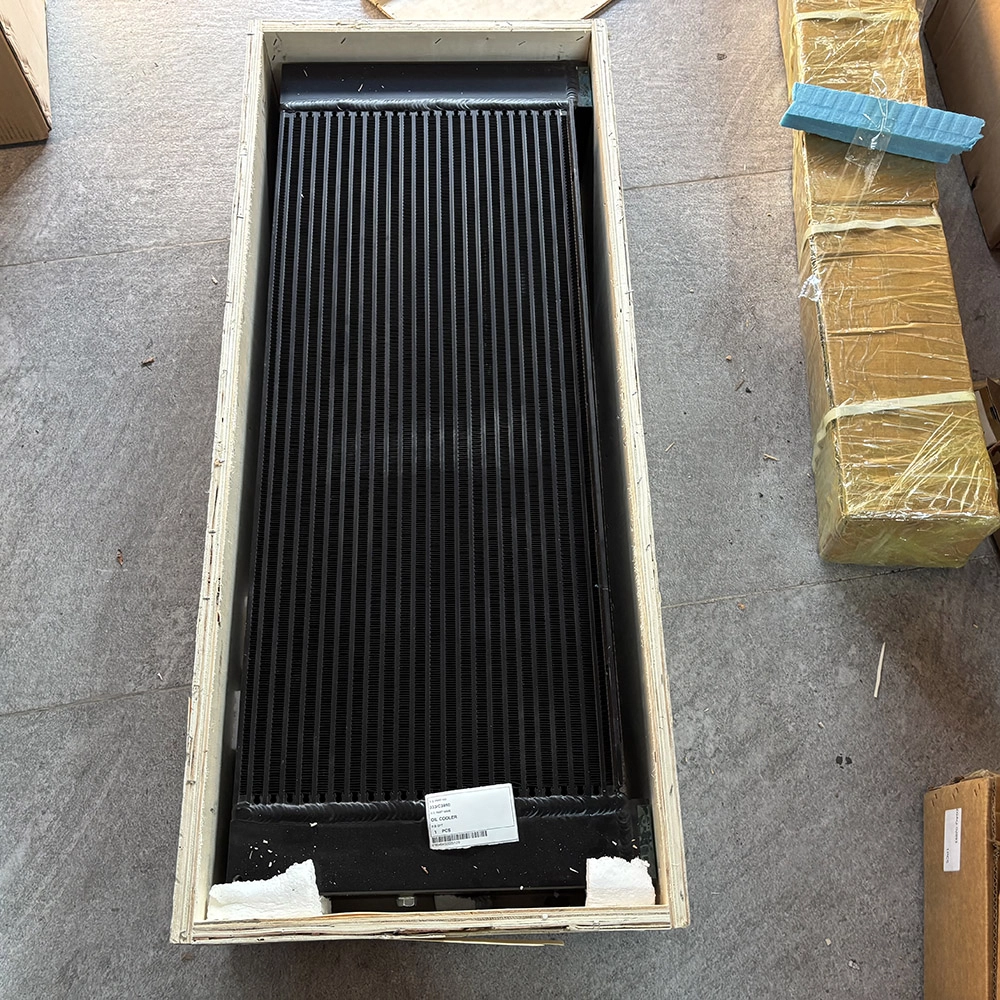
Warranty and Support When Purchasing Replacement Oil Coolers
How to Inspect Undercarriage Parts of Excavator 2026

Specifying Pressure Sensors: Technical Criteria for VR516FS Models
faq
Do you offer customized parts?
-
Yes, we offer tailored solutions to meet specific customer requirements. Whether you need custom dimensions or specialized features, we can design and produce parts that perfectly match your excavator’s needs.
-
How do you ensure the quality of your parts?
We follow strict quality control procedures throughout the manufacturing process. Our parts are tested for durability, performance, and precision to ensure they meet industry standards and exceed customer expectations.
Are your products covered by a warranty?
-
Yes, all of our excavator parts come with a warranty to ensure quality and reliability. The warranty period may vary depending on the type of part. Please contact us for detailed warranty terms for specific products.
-
What is the lead time for receiving excavator parts?
Our typical lead time depends on the complexity and quantity of the order. For standard parts, delivery usually takes between 7 to 14 days. For custom orders, the lead time may vary, but we always strive to ensure timely delivery.
What types of excavator parts do you manufacture?
We manufacture a wide range of excavator parts, including hydraulic components, undercarriage parts, engine parts, wear parts, and more. Our products are designed to fit a variety of excavator models and are built to meet the highest quality standards.
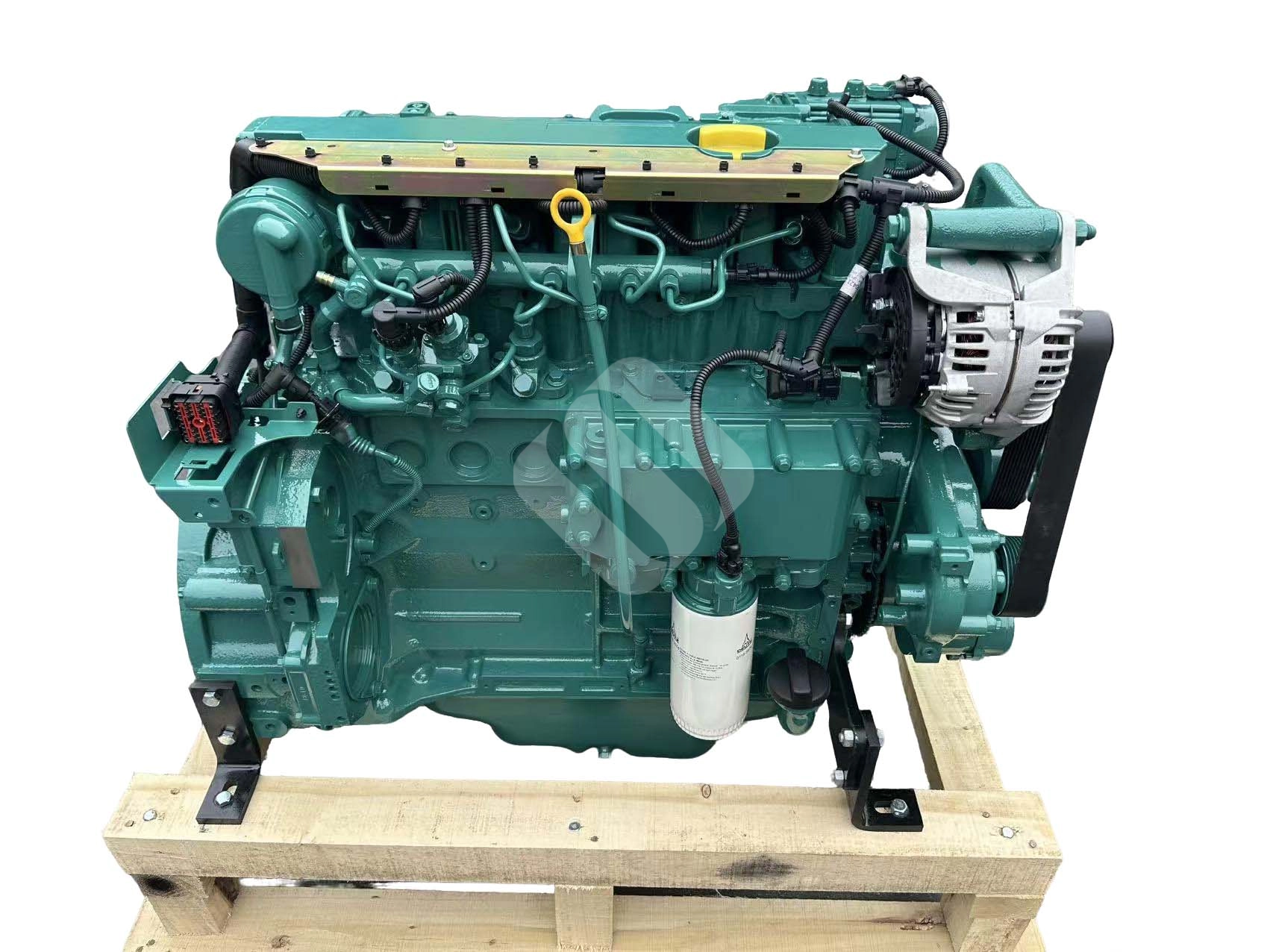
Volvo D5E Diesel Engine | 4.8L 4-Cylinder Turbocharged Common Rail Motor
The Volvo D5E is a state-of-the-art, 4.8-liter, 4-cylinder inline diesel engine. It was engineered to provide high torque at low engine speeds, which is the hallmark of Volvo’s "V-ACT" (Volvo Advanced Combustion Technology). By optimizing the air-to-fuel ratio through electronic precision, the D5E delivers higher productivity with significantly lower fuel consumption and noise levels.
This engine is a popular choice for mid-sized excavators and soil compactors, offering a robust architecture that handles high-pressure injection and heavy hydraulic loads with ease.
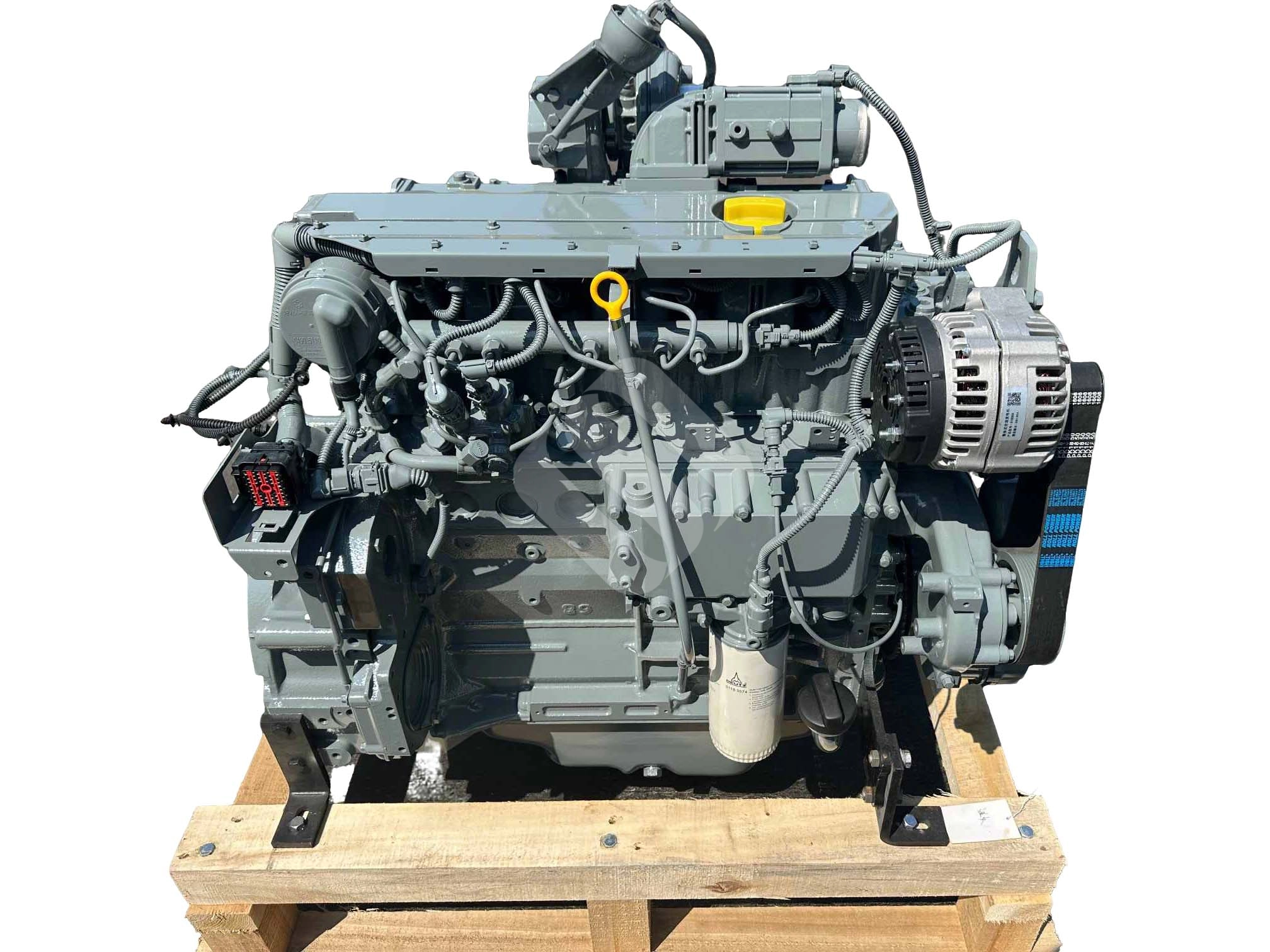
DEUTZ TCD2013L042V Diesel Engine | 4.76L 4-Cylinder Turbocharged Industrial Motor
The DEUTZ TCD2013L042V is a modern, water-cooled 4-cylinder inline diesel engine designed to power the next generation of construction, agricultural, and material handling machinery. This engine represents a significant technological leap forward, utilizing the DEUTZ Common-Rail System (DCR) to achieve superior fuel efficiency, reduced noise, and lower emissions.
Turbocharged and charge-air cooled, the TCD2013L042V is highly compact for its 4.76-liter displacement, offering high power density and reliable performance in demanding load cycles. It is designed to meet stringent Tier 3 / Stage IIIA emission standards.
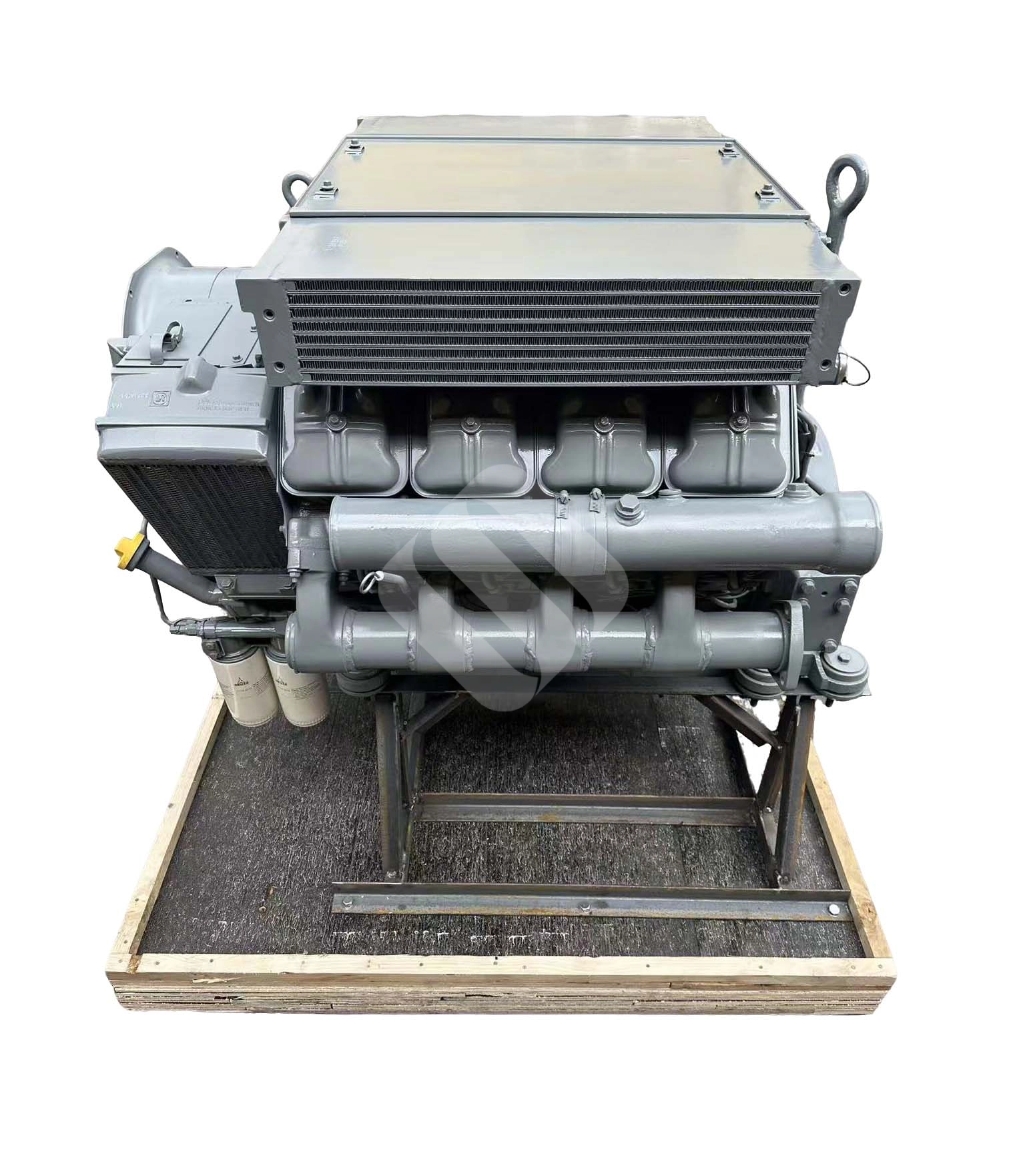
DEUTZ F8L413FW Air-Cooled Diesel Engine | V8 Mining & Industrial Power Unit
The DEUTZ F8L413FW is a naturally aspirated, air-cooled V8 engine. Unlike standard industrial engines, the FW variant features a specialized indirect injection (two-stage) combustion process. This significantly reduces the concentration of nitrogen oxides and carbon monoxide , making it the industry standard for underground mining equipment where air quality is critical.
Because it is air-cooled, there are no radiators, water pumps, or hoses to leak or freeze, ensuring maximum uptime in the harshest conditions on earth.
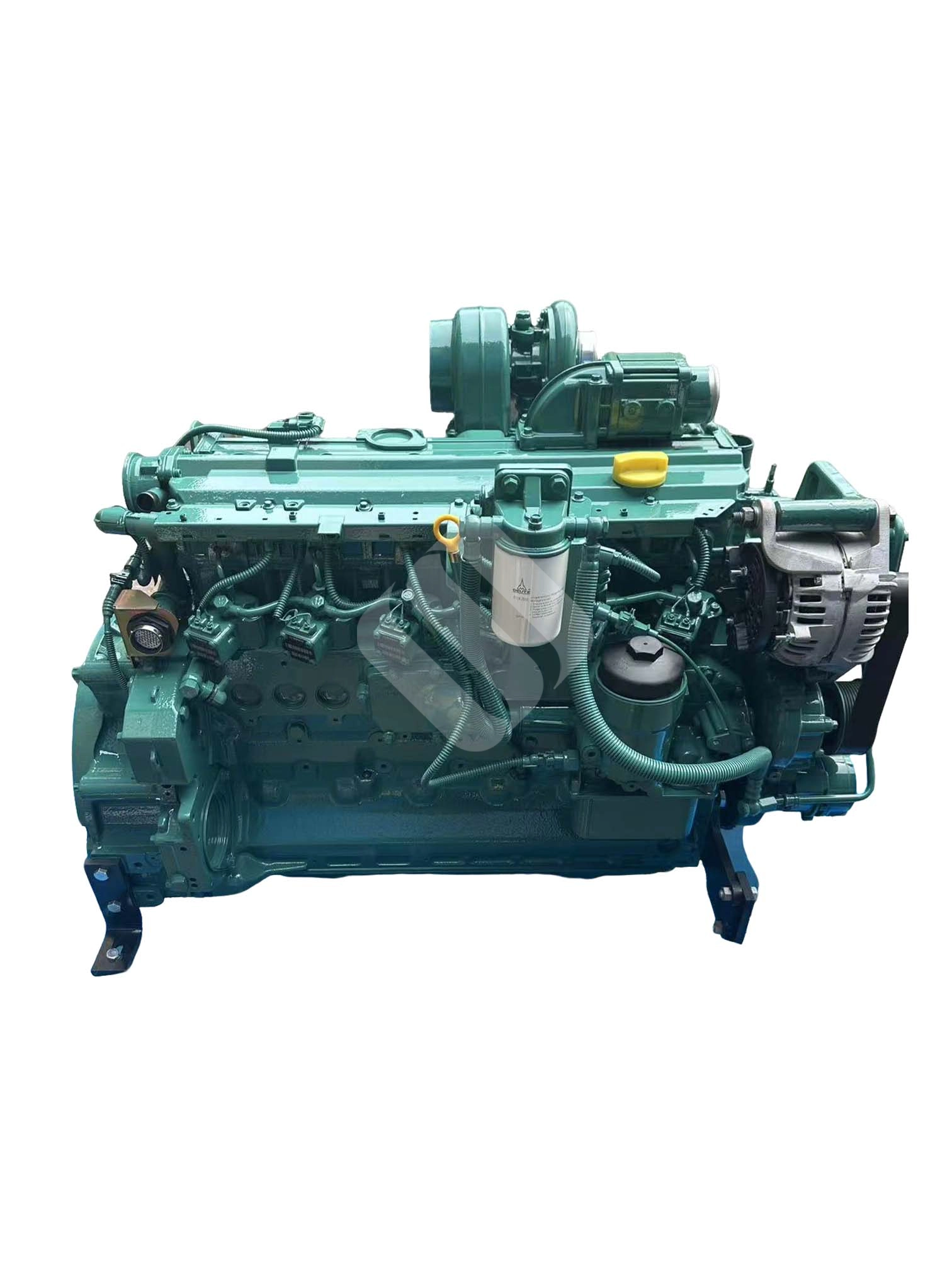
Volvo D6D EGE2 Diesel Engine | 5.7L 6-Cylinder Turbocharged Engine for Volvo CE
The Volvo D6D EGE2 is an inline 6-cylinder, four-stroke engine featuring a common-rail-like individual unit pump system and air-to-air charge cooling. It is designed to deliver consistent power under heavy hydraulic loads, making it the preferred choice for 20-ton class excavators and mid-sized wheel loaders.
With the Volvo E-ECU (Electronic Control Unit), the D6D EGE2 optimizes fuel delivery in real-time, ensuring that the engine responds instantly to operator commands while maintaining excellent fuel economy.

Contact us
Email: ranroswang@hksparkling.com
Wechat: +86 136 0901 0879
Skype: foreverlucia1
WhatsApp: +86 136 0901 0879
Address: No. 514-515, Hulin Road, Tianhe District, Guangzhou, China.
Sparkling Machinery Co.,Ltd
sparkling_machinery
Whatsapp: +8613609010879