 ranroswang@hksparkling.com
  +86 138 2341 8469


Understanding Wear Patterns on Excavator Hubs
- Understanding Wear Patterns on Excavator Hubs
- Why hub wear matters for excavator parts and machine life
- Anatomy of an excavator hub and where wear shows up
- Product focus — genuine-fit replacement for Hyundai machines
- Common wear patterns observed on excavator hubs
- 1. Abrasive wear (linear grooves and scoring)
- 2. Adhesive wear (smearing, heat discoloration)
- 3. Fatigue wear (spalling, pitting)
- 4. Corrosive wear (rust, pitting linked to chemical attack)
- 5. Impact and edge damage (deformation, chipped faces)
- Diagnosing wear: inspection methods that work in the field
- Visual and tactile inspection
- Dimensional checks and runout
- Lubricant analysis and contamination checks
- Vibration and temperature monitoring
- Table: Typical inspection frequency and actionable thresholds
- Root causes: how operator, environment and maintenance interact
- Prevention and mitigation strategies for longer hub life
- 1. Use OEM-equivalent high-quality replacement excavator parts
- 2. Protect seals and maintain lubricant integrity
- 3. Control operating practices
- 4. Schedule condition-based inspections
- When to repair versus when to replace a hub
- Case study vignette: reducing repeat failures by switching to OEM-equivalent hubs
- Brand advantages: Why choose SPARKLING MACHINERY hubs for excavator parts replacement
- Practical checklist before installing a replacement hub
- FAQs — Wear Patterns on Excavator Hubs and Related Excavator Parts
- Q: What is the most common cause of hub failure?
- Q: How often should I inspect the hubs on my excavator?
- Q: Can worn hubs be repaired or must they be replaced?
- Q: How do I choose the right replacement hub among excavator parts suppliers?
- Q: What maintenance steps most reduce hub wear?
- Contact and product CTA
- References and sources
Understanding Wear Patterns on Excavator Hubs
Why hub wear matters for excavator parts and machine life
Excavator hubs are critical components that link the track system to the axle, transmit loads during travel and digging, and help maintain undercarriage alignment. As part of a broader undercarriage system, hub wear directly affects machine stability, fuel consumption, vibration levels, and the premature wear of other excavator parts (rollers, idlers, sprockets, pins and bushings). Understanding wear patterns on hubs helps equipment owners prioritize repairs, reduce unscheduled downtime, and select the right replacement parts to restore reliable operation.
Anatomy of an excavator hub and where wear shows up
To diagnose wear correctly, first understand what a hub is and which interfaces are most vulnerable:
- Hub body: the main cast or forged structure that mounts to the axle.
- Bearing interface: inner bore where bearings sit or where hub and axle meet; common site for fretting and abrasive wear.
- Seal surface: where oil seals contact the hub—critical to keep lubrication in and contaminants out.
- Mounting faces and bolt holes: shear and fatigue failures can start here under cyclic loads.
Product focus — genuine-fit replacement for Hyundai machines
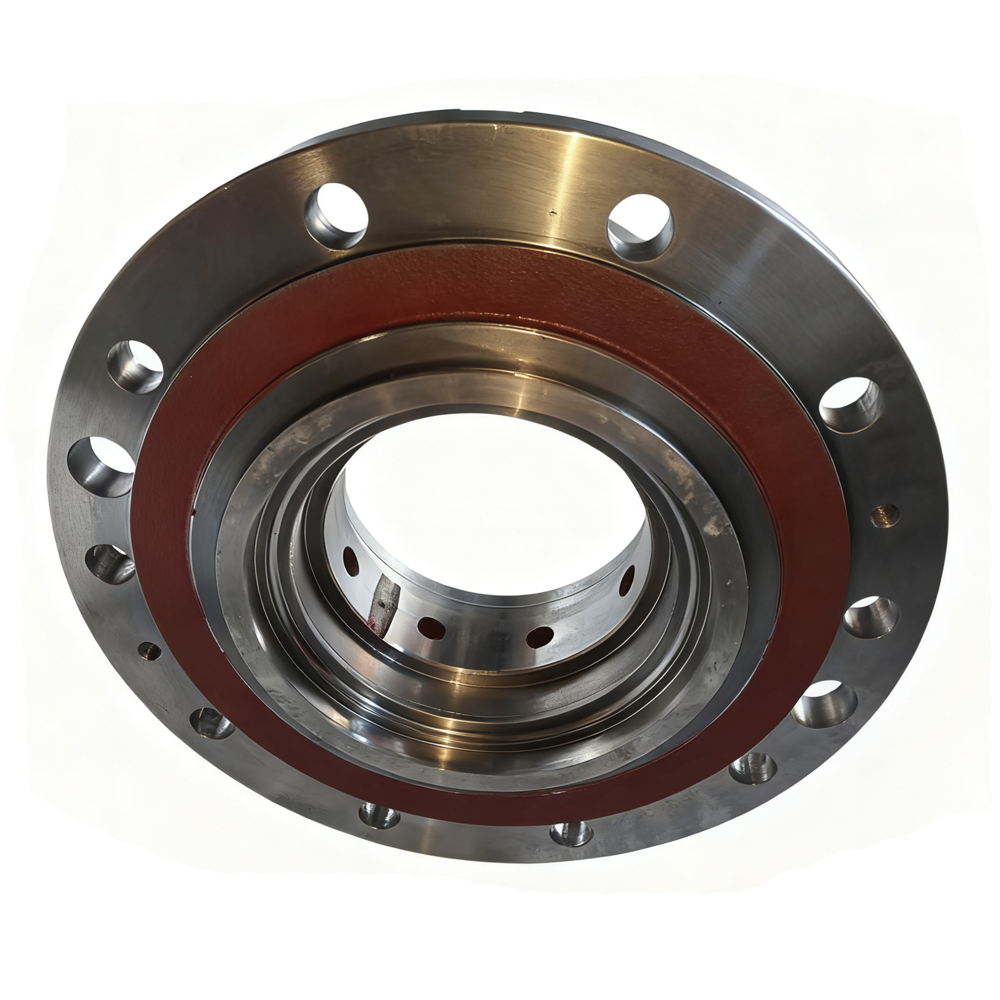
SPARKLING MACHINERY NEW R160W9A R170W7 R170W7A R170W9 ZGAQ-03591 Hub is a core undercarriage component for Hyundai R160W9A/R170W7/R170W7A/R170W9 excavators (heavy-duty construction/mining use). It connects the excavator’s track system to the axle, supporting load and ensuring stable travel.
Meeting Hyundai OEM standards (ZGAQ-03591), it resists -30°C to 100°C temps, wear, and impact, ensuring seamless compatibility and long-term reliable load-bearing performance.
Common wear patterns observed on excavator hubs
Hubs exhibit characteristic patterns depending on the dominant wear mechanism. Recognizing these patterns helps determine root cause and corrective actions.
1. Abrasive wear (linear grooves and scoring)
Appearance: parallel grooves or scoring on bearing bores or seal surfaces.
Cause: ingress of dirt, sand, or hard particles between mating surfaces, often due to compromised seals or contaminated lubricant.
Consequence: increased clearances, vibration, premature bearing failure.
2. Adhesive wear (smearing, heat discoloration)
Appearance: metal transfer, polished areas, or localized weld-like smears with blue/black discoloration from heat.
Cause: inadequate lubrication, severe loading, or misalignment creating metal-to-metal contact.
Consequence: lasting damage to bearing surfaces and the need to replace hubs or bearings.
3. Fatigue wear (spalling, pitting)
Appearance: flaking, pitting, or spalled areas on contact faces or bolt holes.
Cause: cyclic stresses exceed material fatigue limits — often a result of repeated overloads, poor material quality, or design stress concentrations.
Consequence: sudden failures, cracking, and structural compromise.
4. Corrosive wear (rust, pitting linked to chemical attack)
Appearance: rust, etched surfaces, and small pits exacerbated by electrochemical reactions.
Cause: exposure to moisture, chloride environments (marine or winter salts), or contaminants in lubricant.
Consequence: loss of material cross-section, accelerated abrasive wear, and seal degradation.
5. Impact and edge damage (deformation, chipped faces)
Appearance: dents, gouges, or fractured edges on hub flanges or mounting surfaces.
Cause: shocks from rock strikes, transport damage, or improper handling during installation.
Consequence: misfit, uneven loading, and rapid wear of mating components.
Diagnosing wear: inspection methods that work in the field
Combine visual inspection with simple measurements and non-destructive tests to build a reliable diagnosis.
Visual and tactile inspection
- Clean the hub and inspect under good light for grooves, discoloration, and pitting.
- Run your finger or a cloth across surfaces—feel for burrs or scoring.
- Check seal lips and bearing seats for uneven wear.
Dimensional checks and runout
Use calipers and micrometers to measure bore diameters against OEM limits. Measure hub runout (radial and axial) with a dial indicator; excessive runout indicates deformation or bent axle.
Lubricant analysis and contamination checks
Oil or grease sampling can reveal excessive metal particles (indicative of wear), water contamination, or abrasive particles. Simple magnetic plug inspection also helps detect ferrous wear debris.
Vibration and temperature monitoring
Elevated vibration or hub temperature during operation often precedes visible damage. Portable infrared thermometers and handheld vibration meters provide early warning.
Table: Typical inspection frequency and actionable thresholds
| Inspection item | Recommended frequency | Action threshold | Recommended action |
|---|---|---|---|
| Visual hub surface check | Weekly (heavy use) / Monthly (normal) | Any deep grooves, spalling, or cracks | Clean, measure, consider replacement |
| Bore diameter & runout | Every 250-500 operating hours | Exceed OEM wear limits or runout >0.5 mm | Recondition or replace hub and bearings |
| Lubricant sampling | Every 250 hours or per service schedule | Metal particles > baseline, water presence | Flush, replace lubricant, inspect seals/bearings |
| Seal condition | Monthly | Cut or hardened lips, leakage | Replace seals immediately |
Sources for threshold guidance: OEM maintenance manuals (Caterpillar, Komatsu), industry best-practice documents (SKF service bulletins).
Root causes: how operator, environment and maintenance interact
Hub wear rarely has a single cause; it's a combination of factors:
- Poor sealing or contaminated lubrication: allows abrasive particles to reach the bearing/hub interface.
- Overloading and shock events: increase stress cycles and cause fatigue spalling.
- Misalignment and improper installation: concentrate loads and accelerate adhesive wear.
- Material or manufacturing defects: lower fatigue strength or inconsistent hardness across the hub.
- Harsh environments: sand, clay, saltwater and chemicals promote abrasive and corrosive wear.
Prevention and mitigation strategies for longer hub life
Systematic maintenance and correct part selection are the most effective ways to prevent expensive hub failures.
1. Use OEM-equivalent high-quality replacement excavator parts
Choosing hubs manufactured to OEM standards ensures correct material selection, heat treatment, dimensional accuracy, and fit. The SPARKLING MACHINERY NEW R160W9A R170W7 R170W7A R170W9 ZGAQ-03591 Hub is designed to meet Hyundai OEM spec ZGAQ-03591, offering compatibility and the mechanical properties needed for heavy-duty use. Proper fit reduces misalignment and stress concentrations that lead to fatigue and adhesive wear.
2. Protect seals and maintain lubricant integrity
Regularly inspect seals and replace them at the first sign of wear. Use the lubricant grade and intervals recommended by the OEM. For extreme contamination environments, increase lubrication frequency and consider higher-viscosity or contaminated-environment greases.
3. Control operating practices
Operator training to avoid sudden loads, excessive travel on uneven terrain, and minimizing idling in abrasive environments reduces shock loads and abrasive ingress. When working in rock or debris-filled areas, slow maneuvering and periodic cleaning of tracks and hubs pay off.
4. Schedule condition-based inspections
Use run-time monitoring (hours), lubricant analysis, vibration and thermal checks to replace parts proactively before catastrophic failure. Condition-based maintenance reduces life-cycle cost compared to reactive replacement.
When to repair versus when to replace a hub
Repair (re-machining, sleeving, heat treatment) may be feasible for minor bore wear or small surface damage when the hub material is sound and cost-effective. Replace when:
- Cracks, severe spalling, or structural deformation are present.
- Wear exceeds OEM rework limits for bore diameter or runout.
- Fatigue damage is detected near bolt holes or mounting faces.
Using a correctly specified replacement hub (OEM or OEM-equivalent like the SPARKLING MACHINERY ZGAQ-03591 Hub) ensures restored reliability and avoids repeat failures from inferior parts.
Case study vignette: reducing repeat failures by switching to OEM-equivalent hubs
A medium-sized contractor in a rocky quarry experienced repeated hub failures on Hyundai R170-series machines. Failures manifested as bearing bore scoring and early bearing replacement every 1,200 hours. After switching to Hyundai-spec replacement hubs that included improved seal geometry and heat treatment (ZGAQ-03591-compatible), failures dropped; bearing life returned to expected intervals of 3,000+ hours. The contractor also implemented bi-monthly seal inspections and lubricant sampling, which helped identify contamination sources (track cleaning reduced abrasive ingress). Result: lower downtime and 18% lower undercarriage cost over two years.
Brand advantages: Why choose SPARKLING MACHINERY hubs for excavator parts replacement
When selecting replacement hubs, focus on fit, material quality, heat treatment and supplier traceability. SPARKLING MACHINERY’s NEW R160W9A R170W7 R170W7A R170W9 ZGAQ-03591 Hub offers:
- OEM compatibility — manufactured to match Hyundai ZGAQ-03591 specifications for form, fit and function.
- Wide operating range — rated for -30°C to 100°C, suitable for varied climates and heavy-duty usage.
- Material and processing controls — heat-treated and surface-finished to resist abrasive and impact wear.
- Cost-effective sourcing — reliable alternative to expensive OEM spares without sacrificing quality.
Practical checklist before installing a replacement hub
- Verify part number and dimensional drawings against the machine serial number.
- Inspect axle and mating surfaces; repair or replace bearings if signs of wear are present.
- Replace seals and use recommended lubricant volumes and grades.
- Torque mounting bolts to OEM specifications and check runout after installation.
- Record installation in machine maintenance log and set condition-monitoring intervals.
FAQs — Wear Patterns on Excavator Hubs and Related Excavator Parts
Q: What is the most common cause of hub failure?
A: The most common cause is contamination due to failed seals or inadequate lubrication, which leads to abrasive and adhesive wear at the bearing interface.
Q: How often should I inspect the hubs on my excavator?
A: For heavy-duty or high-contamination environments, weekly visual checks and monthly dimensional checks are recommended. Use a condition-based approach with lubricant analysis every 250 hours.
Q: Can worn hubs be repaired or must they be replaced?
A: Minor bore wear or surface damage may be repaired by re-machining or sleeving within OEM tolerance. Replace hubs when cracks, severe spalling, or wear beyond rework limits are present.
Q: How do I choose the right replacement hub among excavator parts suppliers?
A: Select hubs that meet OEM specifications for material, heat treatment and dimensions. Parts like the SPARKLING MACHINERY NEW R160W9A R170W7 R170W7A R170W9 ZGAQ-03591 Hub are made to fit Hyundai R160/R170 series machines and offer a reliable OEM-equivalent option.
Q: What maintenance steps most reduce hub wear?
A: Ensure seals are intact, use correct lubricant and intervals, control operator-induced shocks, keep tracks clean, and perform periodic condition monitoring (vibration, thermal checks, oil analysis).
Contact and product CTA
If you suspect hub wear or need a reliable replacement part for your Hyundai R160W9A/R170W7/R170W7A/R170W9 excavator, contact our sales team or view the product page for the SPARKLING MACHINERY NEW R160W9A R170W7 R170W7A R170W9 ZGAQ-03591 Hub. Our experts will help verify compatibility, provide installation guidance, and recommend inspection intervals to extend the life of your excavator parts. Recognizing wear patterns on excavator hubs will help you take the necessary steps to ensure proper maintenance. When it comes time to replace a hub, it’s important to follow best practices for installing an excavator hub to avoid damage and ensure optimal performance.
References and sources
- Caterpillar — Undercarriage basics and maintenance recommendations. Available from Caterpillar dealer literature and service manuals. (https://www.cat.com)
- Komatsu — Undercarriage inspection and maintenance guidance for track and hub assemblies. (https://www.komatsu.com)
- SKF — Technical information on bearing and hub sealing, lubrication and contamination control. (https://www.skf.com)
- Construction Equipment Guide — Practical articles on undercarriage wear and maintenance practices. (https://www.constructionequipmentguide.com)
- Industry service bulletins and OEM part specifications (Hyundai Construction Equipment service documentation for R160/R170-series). (https://www.hyundai-ce.com or local Hyundai CE dealer)
Note: For exact wear limits, service intervals and torque specifications consult your machine's OEM service manual or authorized dealer. Field results vary by application and environmental conditions.
Best excavator seal kit manufacturers and supplier brands
Inspection Checklist for K9003219 Pulley Idler on Arrival
OEM vs Aftermarket: Choosing Low Pressure Sensor Replacements
The B2B Buyer’s Guide to Hydraulic Cylinders
faq
Do you offer customized parts?
-
Yes, we offer tailored solutions to meet specific customer requirements. Whether you need custom dimensions or specialized features, we can design and produce parts that perfectly match your excavator’s needs.
-
Are your products covered by a warranty?
-
Yes, all of our excavator parts come with a warranty to ensure quality and reliability. The warranty period may vary depending on the type of part. Please contact us for detailed warranty terms for specific products.
-
What is the lead time for receiving excavator parts?
Our typical lead time depends on the complexity and quantity of the order. For standard parts, delivery usually takes between 7 to 14 days. For custom orders, the lead time may vary, but we always strive to ensure timely delivery.
Can I get technical support for installing your parts?
Absolutely. We provide technical support and guidance for the installation and maintenance of our parts. Our team is available to assist you with any questions or concerns to ensure proper installation and optimal performance.
What types of excavator parts do you manufacture?
We manufacture a wide range of excavator parts, including hydraulic components, undercarriage parts, engine parts, wear parts, and more. Our products are designed to fit a variety of excavator models and are built to meet the highest quality standards.

Excavator Spare Parts 6KG 424-64-15610 Hydraulic Valve for Komatsu WA380-3 WA420-3 WA450-3
SPARKLING MACHINERY NEW WA380 WA420 WA450 424-64-15610 Hydraulic Valve is a dedicated, high-precision control component exclusively engineered for KOMATSU WA380, WA420, and WA450 wheel loaders—equipment widely paired with excavators in construction, mining, and logistics for efficient material handling. As the core of the wheel loader’s hydraulic system, it precisely regulates hydraulic oil flow and pressure to control key functions (lift arm elevation, bucket tilting, steering), ensuring smooth, responsive operation during tasks like bulk material loading, stockpiling, and on-site material transfer. This function is vital for preventing hydraulic flow misdirection, maintaining operational accuracy, and avoiding unplanned downtime that disrupts coordinated excavator-loader workflows.
- Compatibility: It is compatible with several Komatsu models, including the WA380-3, WA420-3, WA450-3, WA470-3, and WF450 wheel loaders.
Excavator Spare Parts 9V battery XZFK-404 DIGITAL FLOW METER
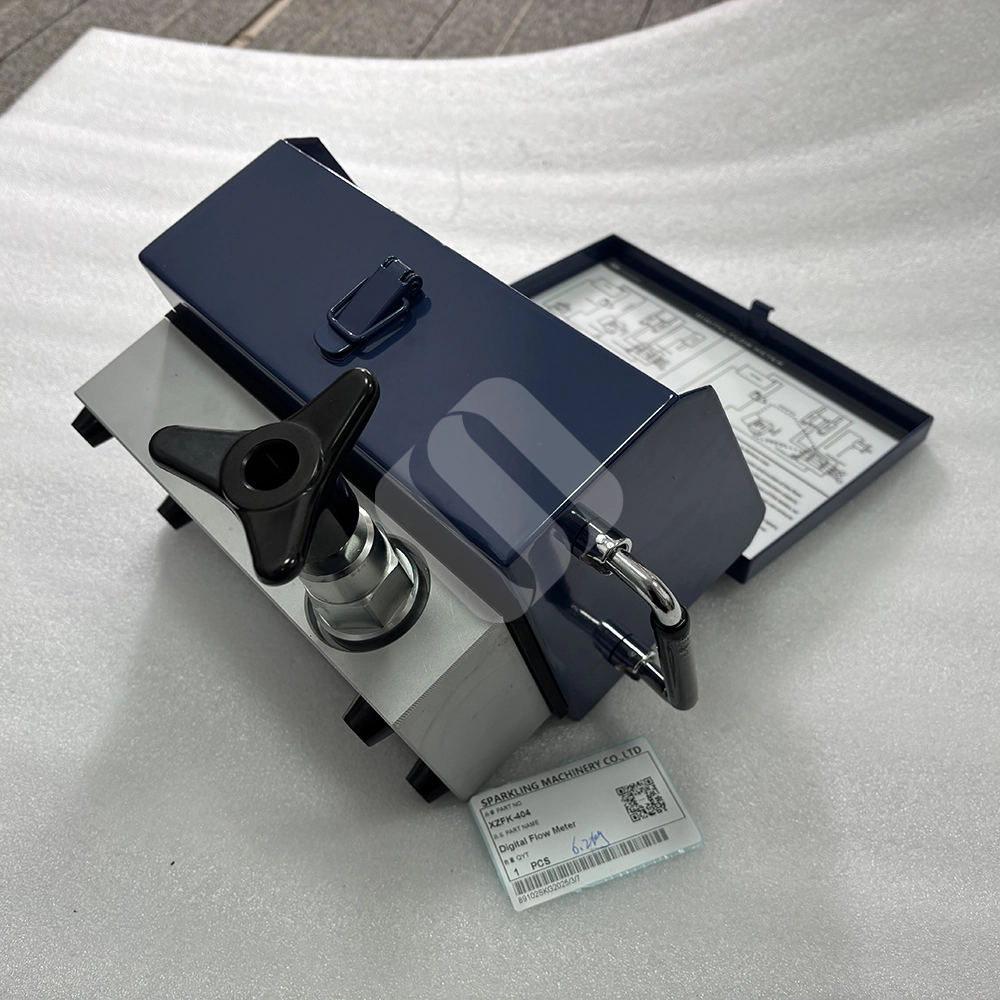
SPARKLING MACHINERY NEW XZFK-404 Digital Flow Meter is a premium China-made fluid monitoring component designed for compatible construction machinery, hydraulic systems, and industrial fluid circuits—including those in excavators, loaders, and hydraulic power units. As the "fluid measurement guardian" of machinery systems, it accurately detects and displays real-time flow rates of hydraulic oil, coolant, or other industrial fluids, with a measurement range tailored to heavy-duty equipment needs. This enables operators and maintenance teams to monitor fluid circulation efficiency, identify abnormal flow (e.g., leaks, blockages), and optimize system performance—critical for preventing hydraulic component damage, reducing energy waste, and ensuring stable operation in construction, mining, and industrial scenarios.
Engineered to original equipment standards, it maintains high measurement accuracy even under harsh working conditions: high hydraulic pressure (up to 35 MPa), temperature fluctuations (-20°C to 80°C), vibration, and exposure to dust or hydraulic fluid contaminants. With a clear digital display (for easy readability) and a robust, corrosion-resistant housing, it resists environmental wear and ensures long-term reliability. Backed by strict quality verification, it guarantees precise fluid data to support proactive maintenance and minimize downtime caused by fluid system failures.
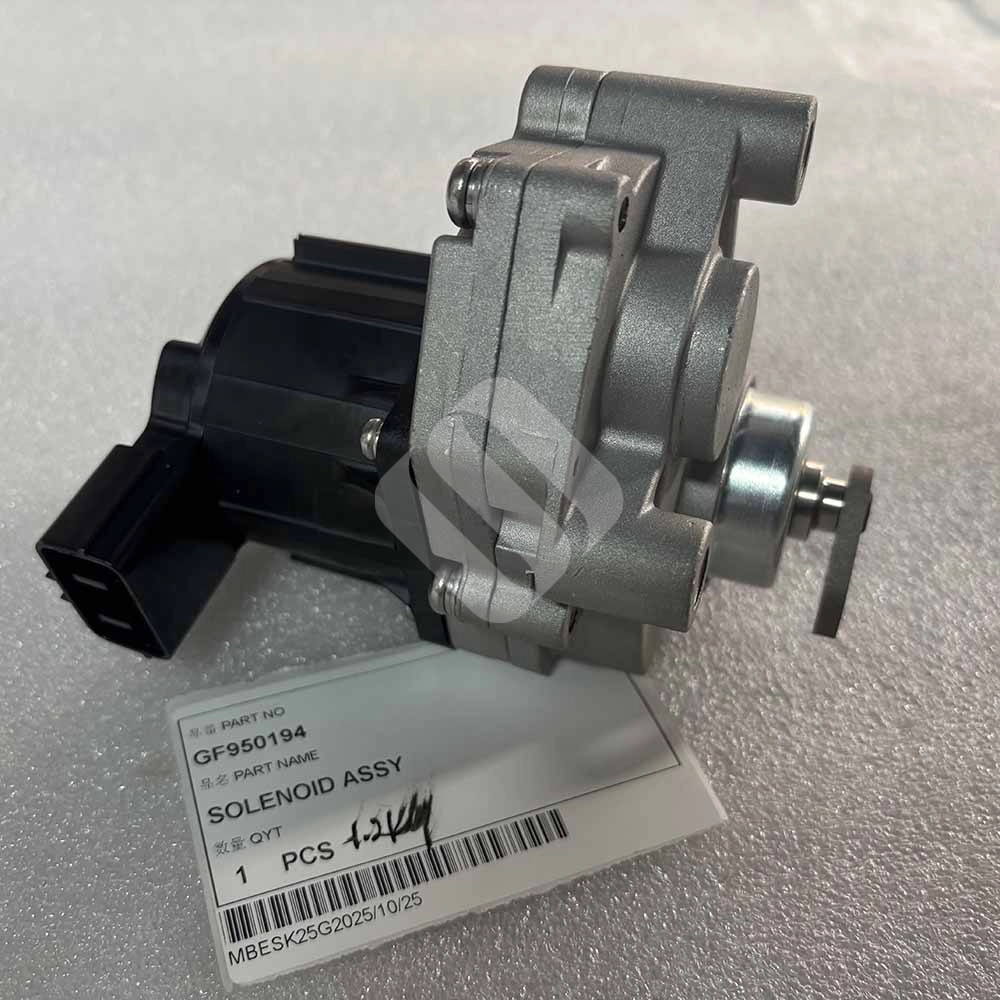
CATERPILLAR HIGH-QUALITY EXCAVATOR PARTS MADE IN CHINA NEW GF950194 SOLENOID ASSY SPARKLING MACHINERY
SPARKLING MACHINERY NEW GF950194 Solenoid Assy is a core electromagnetic control component for Caterpillar excavators (heavy-duty construction/mining use). It converts electrical signals into mechanical motion to control fluid flow or mechanical switches, ensuring precise system operation.
Meeting Caterpillar OEM standards (GF950194), it resists -30°C to 100°C temps, electromagnetic interference, and wear, ensuring seamless compatibility and long-term reliable control performance.
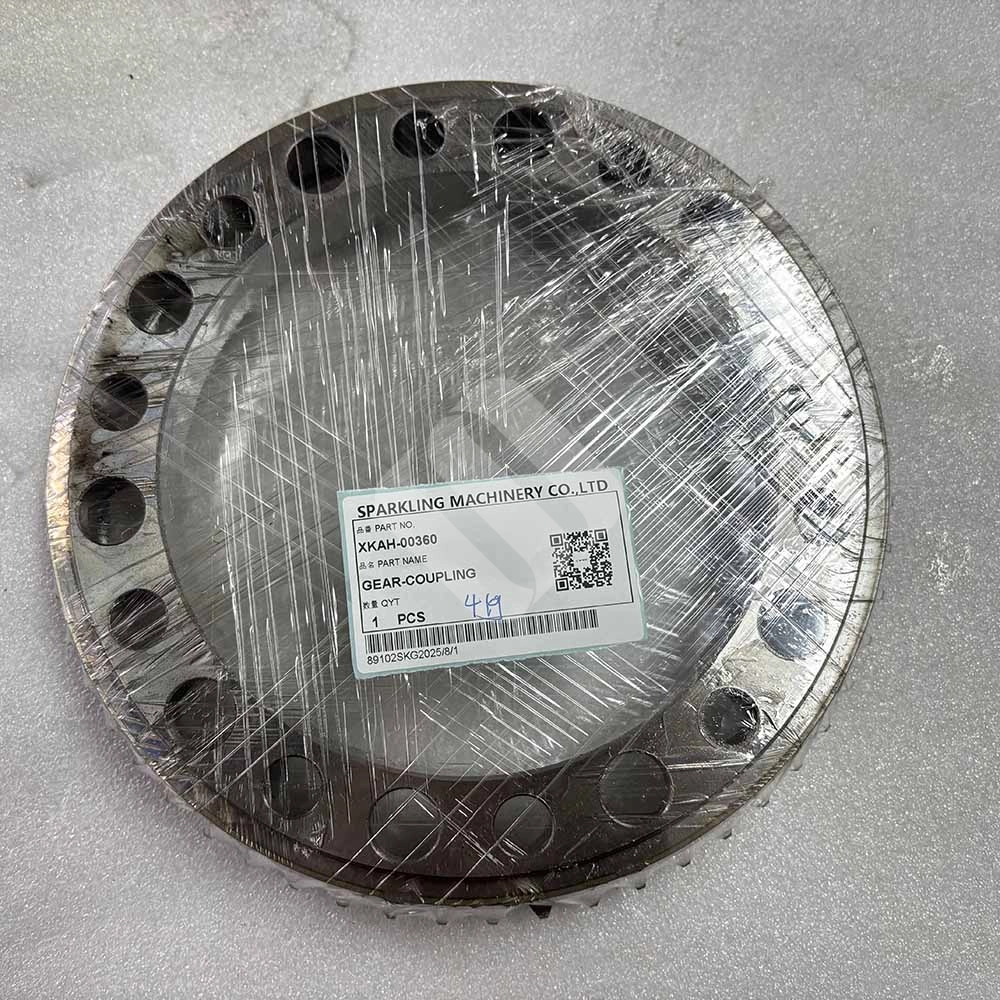
Hyundai HIGH-QUALITY EXCAVATOR PARTS MADE IN CHINA NEW R140LC-7 R140LC-7A R160LC7 XKAH-00360 GEAR-COUPLING SPARKLING MACHINERY
SPARKLING MACHINERY NEW R140LC-7 R140LC-7A R160LC7 XKAH-00360 Gear-Coupling is a core power transmission component for 3 Hyundai excavator models (construction/mining use). It connects and transmits torque between mechanical shafts, absorbing vibration and compensating for alignment deviations.
Meeting Hyundai OEM standards (XKAH-00360), it resists -30°C to 100°C temps, wear, and impact, guaranteeing seamless compatibility and long-term reliable transmission performance.

Contact us
Email: ranroswang@hksparkling.com
Wechat: +86 136 0901 0879
Skype: foreverlucia1
WhatsApp: +86 136 0901 0879
Address: No. 514-515, Hulin Road, Tianhe District, Guangzhou, China.
Sparkling Machinery Co.,Ltd
sparkling_machinery
Whatsapp: +8613609010879